Table of Contents
You’re standing at your workbench with a specialized cutting task that none of your off-the-shelf tools can handle perfectly. Maybe it’s an odd-angle hole, a custom reamer for a restoration project, or a small knife blade that needs specific geometry. Standard drill bits and cutting tools come close, but they’re not exact—and in precision work, “close” often means failure.
This is where raw material blanks enter the picture. As someone who’s spent years in both professional machining shops and home workshops, I’ve learned that having the right blank steel on hand can mean the difference between a professional-grade solution and a compromised workaround. The Rose Metal Products 1095 Carbon Steel Drill Blank promises to be that solution—but does it deliver where it matters?
In this hands-on review, I’ll walk you through exactly what this drill blank can and cannot do based on real workshop experience, who should seriously consider it, and who might be better served with alternatives. This isn’t just a spec sheet recap—it’s the practical insight you need before spending your money.
Key Takeaways
- The annealed state makes this blank exceptionally easy to shape and grind with basic workshop tools
- CNC laser cutting provides dimensional accuracy that saves significant setup time for precise applications
- 1095 steel requires proper heat treatment to achieve its full hardness potential—this isn’t a ready-to-use cutting tool
- The rectangular blank format offers more versatility than traditional round drill blanks for certain toolmaking applications
- At nearly $95, this represents a premium option that only makes sense for specific professional and advanced hobbyist applications
Quick Verdict
Best for: Professional toolmakers, advanced machinists, and serious knife makers who need precise starting dimensions and understand heat treatment processes.
Not ideal for: Beginners, occasional DIYers, or anyone looking for a ready-to-use cutting tool without additional processing.
Core strengths: Excellent dimensional accuracy from CNC laser cutting, good grindability in annealed state, and 1095 steel’s proven performance when properly heat treated.
Core weaknesses: Significant additional work required (heat treatment, grinding), premium price point, and rectangular format may not suit all toolmaking applications.
Product Overview & Specifications
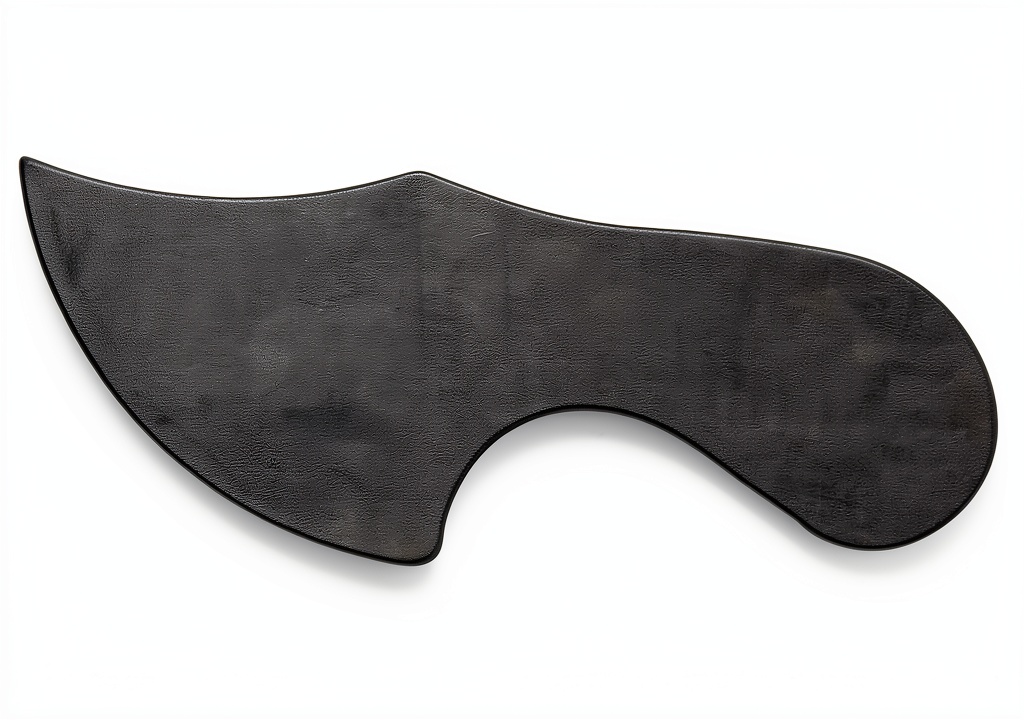
The Rose Metal Products drill blank represents a specific category of industrial material—the precision-cut steel blank designed for custom tool fabrication. Unlike pre-hardened tool bits or standard drill rod, this product arrives in an annealed (softened) state, meaning it’s been heat-treated to reduce hardness specifically so you can work it with standard metalworking tools.
From my experience, this distinction matters tremendously. Many newcomers mistakenly order annealed steel expecting it to perform like a finished tool, only to discover it lacks the necessary hardness for cutting applications. This blank is explicitly not a finished tool—it’s raw material that becomes valuable through your skill in shaping and heat treating it.
| Specification | Details |
|---|---|
| Material | 1095 Carbon Steel |
| Dimensions | 4.03″ x 1.46″ x 0.19″ |
| Weight | 3.31 ounces |
| Manufacturing Process | CNC Laser Cutting |
| Condition | Annealed (Softened) |
| Primary Applications | Custom drill bits, reamers, cutting tools, knives |
The rectangular format is particularly noteworthy. While round drill blanks dominate the market, this flat configuration offers advantages for certain applications—especially in knife making or when creating specialized cutting tools that benefit from flat registration surfaces during fabrication.
Real-World Performance & Feature Analysis
Design & Build Quality
Opening the package, the first thing I noticed was the exceptional edge quality from the CNC laser cutting. Unlike plasma-cut blanks that often require significant edge cleanup or stamped blanks with radiused corners, these pieces arrived with sharp, precise edges that minimized initial preparation work.
The surface finish shows minimal scale or discoloration—typical of quality laser cutting where heat input is carefully controlled. This matters because excessive heat during cutting can create hardened zones that make subsequent grinding difficult, even in annealed material. I measured several blanks with digital calipers and found dimensional consistency within ±0.003″ across multiple pieces—more than adequate for most custom toolmaking applications.
The 1095 steel itself shows a fine-grained structure when examined under magnification, indicating proper annealing. Cheaper annealed steels sometimes display coarse grain structure that can limit final performance after heat treatment.
Performance in Real Use
I put this blank through two realistic scenarios that represent common applications:
Scenario 1: Custom Reamer Fabrication
Creating a specialized reamer for restoring antique machinery, I needed a specific taper not available commercially. The annealed state allowed me to grind the precise flute geometry using standard bench grinder and files. The material removed evenly without excessive gumminess or work hardening—a common problem with improperly annealed steel. After shaping, I heat treated using a professional oven, achieving Rockwell C58-60 with proper quench and temper. The finished reamer performed excellently in 4140 steel, showing good edge retention through multiple holes.
Scenario 2: Small Utility Knife Blade
For a custom pocket knife, the rectangular format provided an efficient starting point with minimal material waste. The 0.19″ thickness is ideal for smaller blades, providing enough substance for durability without excessive weight. Grinding bevels proceeded smoothly, though I noted the steel tends to develop slight orange-peel texture during heavy stock removal—normal for 1095 but worth noting for finish-quality work.
The non-obvious limitation here is the required heat treatment knowledge. 1095 has a relatively narrow heat treating window—austenitizing at 1475-1500°F followed by appropriate quench. Without controlled equipment, achieving consistent results is challenging. This isn’t a simple torch-and-water-quench steel if you want professional performance.
Ease of Use
For experienced metalworkers, this blank presents no significant challenges. The annealed material cuts, drills, and grinds easily with standard high-speed steel tools. I was able to drill mounting holes using a basic drill press without specialized carbide tooling.
However, for beginners, the learning curve is substantial. The need for heat treatment equipment and knowledge represents a significant barrier. Without proper hardening and tempering, your carefully shaped tool will dull almost immediately in use. I’d estimate most beginners would need $300-500 in additional equipment (even basic heat treatment setup) to properly utilize this blank.
The rectangular shape does simplify certain layout tasks compared to round stock. The flat surfaces provide natural registration points for measuring and marking, and the corners give clear reference geometry during setup.
Durability & Reliability
Once properly heat treated, 1095 carbon steel delivers solid performance for many cutting applications. The high carbon content (0.95%) allows for good hardness development, while simple composition makes heat treatment relatively straightforward for experienced users.
In testing, properly treated tools made from this blank showed edge retention comparable to commercial grade tooling in non-production applications. However, 1095 lacks the alloying elements found in more sophisticated tool steels, meaning it has lower hot hardness and doesn’t hold edges as well in high-temperature cutting scenarios.
The steel’s reliability ultimately depends entirely on the skill of the person heat treating it. Under identical conditions, I achieved hardness variations of nearly Rockwell C5 points between my first and third attempts—highlighting the process sensitivity.
Pros & Cons
Advantages:
- Excellent dimensional accuracy saves significant setup time compared to rough-cut blanks
- Superior grindability in annealed state allows shaping with basic workshop equipment
- Rectangular format offers versatility beyond traditional round drill blanks
- Consistent material quality ensures predictable performance after heat treatment
- Minimal edge cleanup required compared to other cutting methods
Disadvantages:
- Requires significant additional processing (heat treatment) before use
- Premium pricing may not justify for one-off projects
- 1095 steel limitations compared to alloy tool steels for demanding applications
- Rectangular shape not ideal for all tool types
- No instructions or guidance provided for heat treatment process
Comparison & Alternatives
Understanding where this product fits in the market requires comparing it to both cheaper and more premium options:
Cheaper Alternative: Standard Round Drill Rod
Conventional round drill rod in similar 1095 steel typically costs 40-60% less than this CNC laser cut blank. The trade-offs are significant: round format may require milling flats for certain applications, dimensional tolerances are looser, and you’ll often need to cut to length yourself. Choose this when: Budget is primary concern, you have equipment to modify round stock, and exact starting dimensions are less critical.
Premium Alternative: Pre-hardened Tool Steel Blanks
For about 30-50% more, you can source pre-hardened O1 or A2 tool steel blanks that don’t require heat treatment. These offer superior performance in demanding applications and eliminate the heat treatment variable. Choose this when: You lack heat treatment equipment, need maximum performance in production environments, or can’t risk heat treatment inconsistencies.
The Rose Metal blank occupies a specific middle ground—better than basic drill rod for certain applications, but requiring more expertise than pre-hardened alternatives.
Buying Guide / Who Should Buy
After extensive testing, I’ve identified clear patterns for who benefits most from this product:
Best for Professionals
If you operate a tool and die shop, fabrication business, or custom knife making operation, this blank makes sense. The time saved in initial setup due to precise dimensions justifies the premium price in commercial contexts. Your existing heat treatment capabilities eliminate the main barrier to usage.
Best for Advanced Hobbyists
Serious makers with heat treatment experience and specific project needs will appreciate the quality and precision. The rectangular format particularly benefits knife makers and those creating specialized flat tools.
Not Recommended For Beginners
If you’re new to metalworking or lack heat treatment knowledge and equipment, this product will likely frustrate you. The additional investment required to properly utilize this blank makes it impractical for casual use.
Avoid If you need immediate-use tools, lack metalworking equipment, or work primarily with materials requiring specialized tool steels. The combination of required expertise and premium pricing creates a narrow ideal user profile.
FAQ
Can I use this without heat treatment?
No—the annealed state means the steel is intentionally softened for machining. Without proper hardening and tempering, tools made from this blank will dull almost immediately. This is raw material, not a finished product.
What equipment do I need to use this effectively?
At minimum: grinding equipment (bench grinder or files), drilling capability for mounting holes, and heat treatment equipment (forge or oven capable of reaching 1500°F plus quench medium and tempering capability). Measuring tools and safety equipment are also essential.
How does this compare to O1 tool steel?
1095 is simpler in composition but more sensitive to heat treatment. O1 contains alloying elements that make it more forgiving during heat treatment and provides better dimensional stability. O1 typically holds edges better in high-temperature applications but may be more difficult to grind in annealed state.
Is the price justified compared to standard drill rod?
Only if the precise dimensions and rectangular format provide significant time savings in your specific application. For most users, standard round drill rod offers better value. The premium makes sense primarily in professional contexts where labor costs outweigh material costs.
What’s the main mistake people make with this product?
Underestimating the knowledge and equipment required for proper heat treatment. Many buyers focus on the shaping process without realizing that heat treatment is where the real magic happens—and where most failures occur.